
A B2B content strategy built around topical authority means systematically owning every subtopic, search intent, and buyer question inside a niche – not publishing isolated blog posts. Topical authority signals to Google’s ranking systems and to AI Overviews that a brand is the definitive, most trustworthy source on a subject cluster. Brands that structure their content this way convert organic visibility into qualified pipeline, rather than vanity traffic.
Most B2B marketing teams still treat content like a checklist: pick a keyword, write a post, move to the next one. That approach worked when search results were ten blue links deep. It does not survive contact with an algorithm that now rewards depth, first-hand expertise, and interconnected topic coverage over keyword density.


A genuinely effective B2B content strategy requires a shift in mindset – from publishing individual articles to architecting an entire knowledge system around your buyer’s journey. Below, we unpack what topical authority actually means, why it has become the deciding factor for organic growth, and the exact framework to build it, backed by B2B marketing services built specifically for demand-driven pipelines.
What is Topical Authority in a B2B Content Strategy?
Topical authority is the degree to which search engines and readers recognize a website as the most comprehensive, accurate, and trustworthy source on a given subject. In practical terms, it means your domain doesn’t just rank for one keyword – it ranks, consistently, across dozens of related queries because your content answers the entire topic, not a sliver of it.

Three signals typically define topical authority:
- Content depth – every reasonable subtopic and follow-up question is covered somewhere on the site.
- Internal architecture – pillar pages and cluster articles interlink logically, showing search engines how topics relate.
- Sustained first-hand expertise – content reflects real operational knowledge, not summarized third-party information.
Unlike traditional keyword targeting, a topical authority approach starts with the buyer’s problem space and works outward, mapping every question a prospect might ask across awareness, consideration, and decision stages.
Why This Matters More in a B2B Content Strategy Than in B2C
B2B buying cycles are longer, involve multiple stakeholders, and require far more educational content before a lead is sales-ready. A single blog post rarely closes a deal. What moves a buying committee is a body of content that consistently demonstrates category expertise – which is precisely what topical authority measures.
Why B2B Content Strategy Is Shifting Toward Topical Authority
Search behavior and algorithmic priorities have both changed substantially, and B2B marketers who ignore the shift are competing with an outdated playbook.

1. Google’s E-E-A-T Standards Now Reward Demonstrated Experience
Google’s guidance on people-first content places explicit weight on Experience, Expertise, Authoritativeness, and Trustworthiness. According to Google’s own documentation on helpful content, content should reflect genuine, first-hand knowledge of a product, service, or process rather than generic aggregation. Thin, templated blog posts that recycle competitor talking points are structurally at odds with this standard.
2. AI Overviews Reward Comprehensive Sources, Not Isolated Keywords
AI-driven search results synthesize answers from sources that thoroughly cover a topic. A domain with fragmented, shallow coverage is far less likely to be cited as a source than one with an interlinked cluster of authoritative pages. This is arguably the single biggest reason topical authority has moved from “nice to have” to foundational.
3. Buying Committees Research Across Multiple Sessions
Enterprise and mid-market buyers rarely convert from a single visit. They return, compare, and share content internally. A site that answers every stage of that research journey keeps the prospect inside its ecosystem instead of losing them to a competitor’s better-organized resource hub.
Core Pillars of a Future-Ready B2B Content Strategy
Building topical authority is not a single tactic; it is an operating system made up of interdependent pillars.
Pillar 1: Topic Clusters and Pillar Pages
A pillar page covers a broad topic at a high level and links out to detailed cluster articles that each address a specific subtopic in depth. For example, a pillar on demand generation might link to supporting articles on demand generation strategy from awareness to pipeline, account-based approaches, and channel-specific tactics. This structure tells search engines exactly how your content relates, which is central to earning topical authority.
Pillar 2: Search Intent Mapping
Every keyword carries an implicit intent – informational, navigational, commercial, or transactional. A mature B2B content strategy maps content types to intent instead of guessing:
| Search Intent | Buyer Stage | Ideal Content Type |
|---|---|---|
| Informational | Awareness | Educational guides, definitions, explainer articles |
| Commercial investigation | Consideration | Comparison posts, buyer’s guides, case studies |
| Transactional | Decision | Product pages, demo requests, pricing pages |
| Navigational | Retention/Expansion | Help docs, onboarding content, customer stories |
Pillar 3: Internal Linking as a Trust Signal
Internal links are not just navigation; they are a declaration of topical relationships. Linking a piece on B2B landing page optimization to a broader piece on B2B digital marketing strategy and channel integration reinforces to search engines that both pages belong to the same expert ecosystem.
Pillar 4: Content Refresh Cycles
Topical authority erodes if content goes stale. Search engines and readers both penalize outdated statistics, dead links, and references to deprecated tools. A refresh cadence – typically every six to twelve months for cornerstone content – keeps authority compounding rather than decaying.
How AI Overviews and SGE Are Reshaping B2B Content Strategy
The rise of generative answers inside search results has changed what “ranking” even means. When an AI Overview answers a query directly, fewer users click through to any single website – which means the metric that matters is no longer raw traffic, but whether your brand is the cited, trusted source behind that answer.
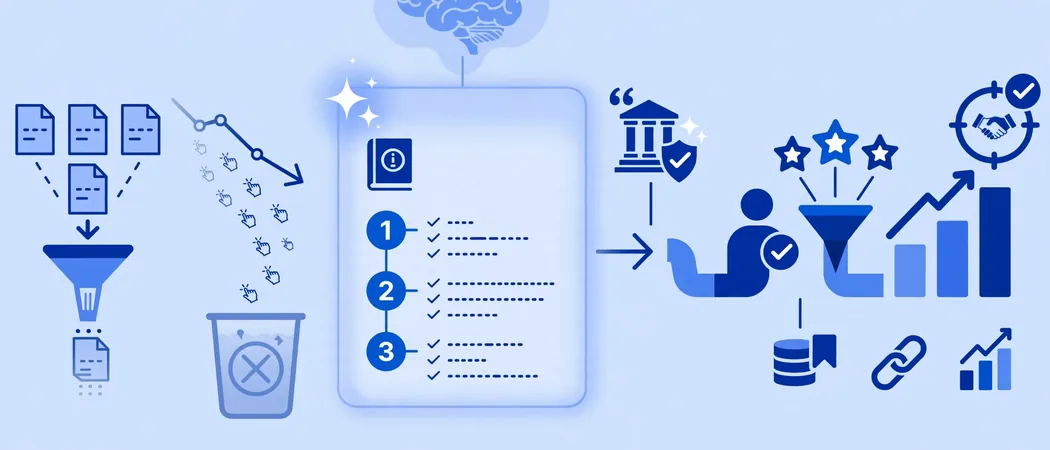
This shift has three practical implications for content teams:
- KPIs must move from traffic to outcomes. Leads, pipeline influence, and brand mentions inside AI-generated answers matter more than pageviews alone.
- Surface-level content gets filtered out first. Generic content that merely repackages known facts provides little unique value for an AI system to surface.
- Structured, extractable answers perform better. Content formatted with clear definitions, numbered steps, and bulleted summaries is easier for both readers and AI systems to parse and cite.
Step-by-Step: Building Topical Authority for Your B2B Brand
Building topical authority is a sequential process, not a one-time sprint.
- Define your core topic universe. List the three to five subjects your buyers care about most and that map directly to your product’s value proposition.
- Audit existing content against those topics. Identify gaps, outdated pieces, and cannibalizing duplicates.
- Build pillar pages for each core topic. Each pillar should comprehensively summarize the subject and link to deeper cluster content.
- Produce cluster content mapped to search intent. Use the intent table above to decide format and depth for every article.
- Interlink relentlessly but naturally. Every new article should link to at least two to three existing pieces and be linked back from the relevant pillar.
- Layer in first-hand proof. Original data, case studies, and practitioner commentary differentiate your cluster from AI-generated competitor content.
- Establish a refresh calendar. Revisit and update cornerstone pages on a fixed schedule rather than leaving them to decay.
- Track authority metrics, not just rankings. Monitor share of voice, branded search growth, and assisted conversions alongside keyword position.
Traditional Keyword-Led Content vs Topical Authority Content
| Factor | Traditional Keyword-Led Approach | Topical Authority Approach |
|---|---|---|
| Planning unit | Individual keyword | Full topic cluster |
| Content relationship | Isolated articles | Interlinked pillar and cluster architecture |
| Update cadence | Publish and forget | Scheduled refresh cycles |
| Success metric | Keyword rank, pageviews | Share of voice, pipeline influence, AI citation |
| Resilience to algorithm updates | Low – vulnerable to core updates | High – depth and structure absorb volatility |
| Buyer journey coverage | Partial, often top-of-funnel only | End-to-end, awareness through retention |
Common Mistakes B2B Marketers Make With Content Strategy
Even well-resourced teams fall into predictable traps when attempting to build topical authority.
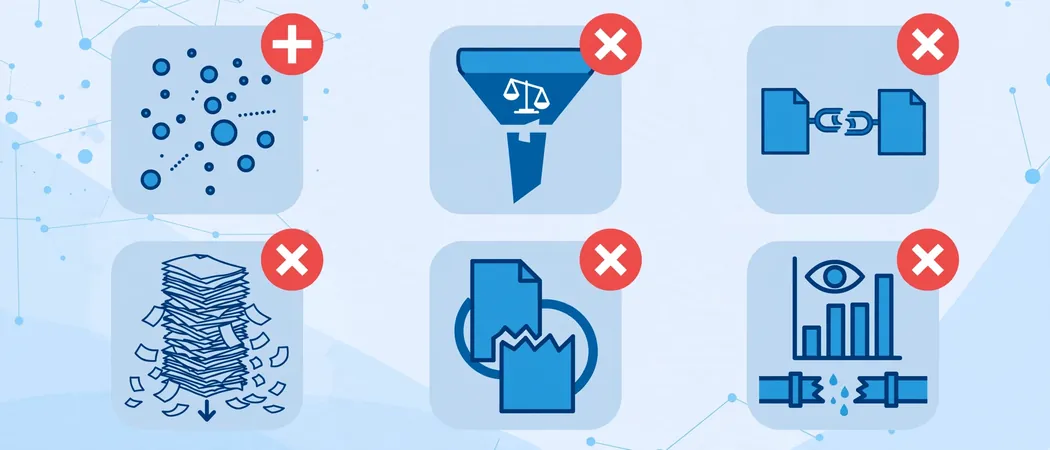
- Publishing without a topic map. Random keyword targeting produces disconnected content that never compounds into authority.
- Ignoring middle-of-funnel content. Many B2B sites over-invest in top-of-funnel blogs and under-invest in comparison and evaluation content, leaving the consideration stage thin.
- Treating internal linking as an afterthought. Links added after publication, rather than planned during content architecture, rarely reflect genuine topical relationships.
- Chasing volume over depth. Mass-producing shallow articles is explicitly flagged under Google’s spam policies as scaled content abuse, and it actively works against ranking goals.
- Never retiring or consolidating old content. Multiple thin articles competing for the same keyword dilute authority instead of building it; consolidation into a single strong pillar usually performs better.
- Measuring success by traffic alone. Traffic that never converts into pipeline is a vanity metric, not proof of a working content strategy.
Expert Tips for Sustained Topical Authority
- Anchor every cluster in a subject-matter expert. Bylines from practitioners with demonstrable experience carry more E-E-A-T weight than anonymous or generic authorship.
- Use original research sparingly but strategically. Even a small internal survey or benchmark dataset differentiates cornerstone content from AI-generated competitor articles.
- Align content calendars with sales enablement. The best B2B content strategy treats sales objections as a direct source of content ideas.
- Build a consistent internal linking template. Standardize how pillar pages link to clusters, and how clusters link back, so the architecture scales predictably as the library grows.
- Prioritize featured-snippet formatting. Short definitions, bulleted lists, and numbered steps near the top of a section increase the odds of both classic featured snippets and AI Overview citations.
Mapping Content Types to the B2B Funnel
| Funnel Stage | Buyer Mindset | Recommended Content Formats |
|---|---|---|
| Awareness | “I have a problem I’m starting to understand” | Educational blog posts, industry explainers, glossary pages |
| Consideration | “I’m comparing possible solutions” | Comparison guides, ABM strategy breakdowns, webinars |
| Decision | “I’m evaluating specific vendors” | Case studies, ROI calculators, demo pages |
| Retention/Expansion | “I already use this, what else can I do” | Advanced guides, onboarding playbooks, customer success stories |
For teams looking to connect awareness-stage content directly to revenue, this full-funnel content strategy framework offers a useful complementary structure, and our own breakdown of B2B inbound marketing strategy explains how inbound and topical authority reinforce each other.
Measuring Success: KPIs Beyond Traffic

A future-ready B2B content strategy tracks a broader scorecard than rankings and sessions:
- Share of voice within the topic cluster relative to direct competitors.
- Branded search growth, indicating rising awareness driven by content.
- Assisted conversions, showing how content influences deals that convert through other channels.
- AI citation frequency, tracking how often your brand appears as a cited source in generative answers.
- Sales-cycle influence, measured through content touchpoints logged in the CRM before a deal closes.
Industry research from organizations such as the Content Marketing Institute consistently finds that B2B marketers who document their content strategy formally outperform those operating without one – reinforcing that topical authority is a planning discipline, not a publishing accident.
FAQ
What is topical authority in a B2B content strategy?
Topical authority is the recognition, by both search engines and readers, that a website comprehensively and reliably covers a given subject area, rather than ranking for isolated, disconnected keywords.
How long does it take to build topical authority for a B2B brand?
Most B2B brands see meaningful gains within six to twelve months of consistent, structured publishing, though timelines vary based on competitive density and existing domain strength.
Does AI Overview reduce the value of a B2B content strategy?
No – it changes what success looks like. Content still needs to exist and be authoritative for AI systems to cite it; the metric shifts from clicks to citations and pipeline influence.
How many articles are needed for a topic cluster?
There is no fixed number; the goal is comprehensive coverage of realistic buyer questions within a subject, which for most B2B topics ranges from eight to twenty interlinked articles per pillar.
What is the difference between a pillar page and a cluster article?
A pillar page provides broad, high-level coverage of a topic and links to cluster articles, which each go deep on one specific subtopic within that pillar.
Turning Topical Authority Into Pipeline
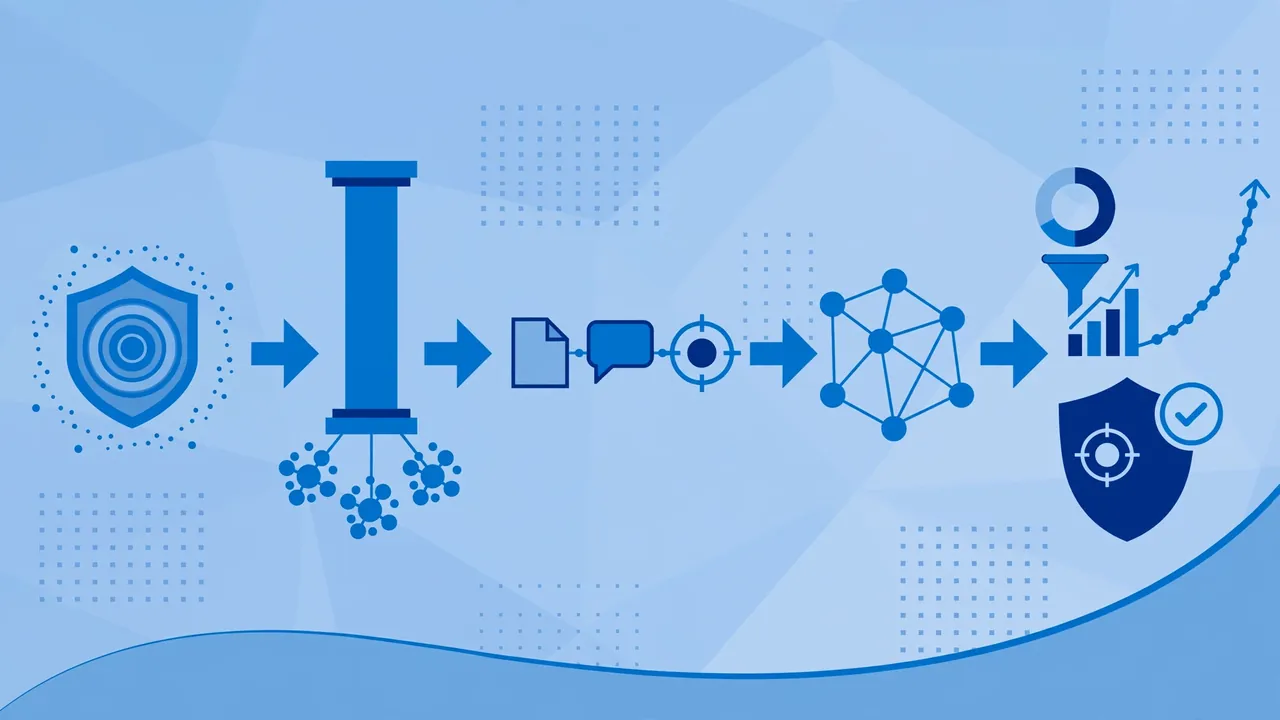
A modern B2B content strategy is no longer about publishing more; it is about publishing in a structure that search engines, AI systems, and buying committees all recognize as authoritative. Pillar-and-cluster architecture, intent-mapped formats, disciplined internal linking, and outcome-based KPIs together create a content system that compounds in value rather than resetting with every new post.
Teams that make this shift stop chasing algorithm updates and start owning their category. If your current content library feels scattered rather than strategic, partner with a B2B marketing agency built to architect topical authority from the ground up and turn it into measurable pipeline.